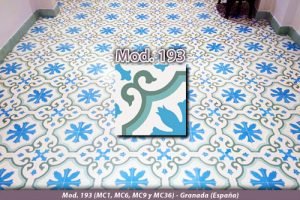
To clean bathroom tiles without damaging the glaze, warm water and a pH-neutral detergent are enough: rinse thoroughly and dry afterwards with a microfibre cloth. Ceramic glaze is a layer of glass fired onto the tile and it withstands almost any household product; what does suffer is the cement-based grout, which acids — vinegar, muriatic acid, limescale removers — dissolve little by little until it turns sandy.
That is the confusion behind almost everything written about how to clean bathroom tiles: people talk about the tile when the problem is in the grout. A tiled wall puts two materials with opposite chemical resistance side by side.

What should you use to clean bathroom tiles without ruining the glaze?
Warm water and a pH-neutral detergent, or diluted neutral soap, applied with a soft sponge or a microfibre cloth. The dirt on a bathroom wall is body grease, soap and dust: it comes away with surfactant and water, not with acid.
The order matters. Apply the product from the bottom up and rinse from the top down: if the cleaner runs over dry tile it leaves streaks worse than the original dirt.
The step almost everyone skips is the last one. Rinsing removes the surfactant, which otherwise leaves a matt film that traps dust; and drying with microfibre prevents the limescale ring, which does not come from the soap but from water evaporating on the surface.
Why do vinegar and limescale removers attack the grout even though the tile survives?
Because the glaze is vitreous and the grout is cement. Cleaning vinegar has a pH of around 2.5 and muriatic acid is diluted hydrochloric acid: on the glaze of a fired tile not much happens, but on cement-based grout they react with the calcium compounds in the set cement and dissolve them.
The damage is not visible on day one, it shows up six months later: the grout turns sandy under your fingernail, becomes more porous, holds more dirt and ends up letting water through behind the tiles. The more acid you use, the faster it gets dirty.
How to tell whether your grout is cement-based or epoxy
Epoxy grout does resist acids and does not absorb water, but in a domestic bathroom it is the exception. Telling them apart is easy: let a drop of water fall on an inconspicuous spot. If it soaks in and the joint darkens for a few seconds, it is cement-based. If the water stays as a bead on a slightly plastic surface, it is epoxy.
And if your bathroom includes unglazed materials — a wall of cement tiles, a terracotta skirting — the acid does not only attack the grout: it attacks the tile itself. On a cement tile the colour is pressed pigmented cement, not a glaze, and a limescale remover marks it for good.
How do you remove limescale and soap scum from a shower wall?
They are two different kinds of dirt, even when they turn up together. Limescale is the calcium carbonate left behind as water evaporates: white, shiny rings. Soap scum is a greasy, matt film formed when soap reacts with the calcium in the water. The crust on a shower screen combines the two, which is why no single product lifts it.
- Wet the wall with hot water from the shower for a minute: the steam softens the film of soap.
- Apply a pH-neutral or mildly alkaline degreaser, leave it to work for a few minutes without letting it dry and rub with a soft sponge.
- For any limescale ring left behind, use a descaler for ceramic tiles, with a cloth and on the tile, not on the grout. Respect the dwell time on the label: leaving it longer does not clean more, it only damages grout and silicone.
- Work the grout lines with a paste of baking soda and water and a soft-bristled brush. Baking soda is far softer than a fired glaze and will not scratch it.
- Rinse with plenty of clean water: whatever stays in the pores of the grout keeps working long after you have finished.
- Dry the wall and the screen with microfibre or a squeegee: it is the only thing that stops the ring coming back.
What each stain really is and how to remove it
Almost all the damage comes from applying the right product to the wrong problem.
| Stain | What it really is | How to remove it | What not to use |
|---|---|---|---|
| Shiny white ring on the screen and in the shower corner | Limescale (calcium carbonate) from evaporated water | Descaler for ceramic tiles on the tile, then rinse and dry | Bleach, which does not dissolve limescale, and acid running down the grout |
| Matt film that dulls the shine of the tile | Soap scum: grease, not mineral | Neutral or mildly alkaline degreaser, soft sponge and rinsing | Limescale remover: it does nothing to grease and punishes the grout |
| Black spots along the grout line | Mould established in the pores of the cement | 3% hydrogen peroxide, soft brush and ventilation | Metal scouring pads and concentrated bleach every day |
| Darkened silicone where the wall meets the shower tray | Mould inside the sealant itself | Cut out and replace the silicone bead | Persisting with whiteners: the colour does not come back |
| Uniform whitish veil after building work | Dried grout residue on the glaze | Acid-free cement residue remover | Muriatic acid: it takes off the veil and the new grout with it |
| Diffuse dark mark on zellige or terracotta | Liquid absorbed through the pores or the crackle glaze | Neutral soap and patience; on terracotta, a specific solvent and a sealer afterwards | Acids and pressurised steam |
How do you clean mould from grout, and when is it time to regrout?
Mould lives in the grout and in the silicone, almost never on the glaze: it needs porosity and trapped moisture, and a fired glaze offers neither. For surface mould, spray pharmacy hydrogen peroxide (3%, ten volumes) onto the grout, wait ten or fifteen minutes, brush gently and rinse.
Two warnings that are not up for discussion: never mix bleach with vinegar — it releases chlorine gas — or bleach with ammonia, which produces chloramines. And bleach whitens mould but does not dissolve limescale, because it is not an acid: use it against calcium deposits and you will scrub for nothing.
Nor does it repair anything. If the grout crumbles when you scrape it with the tip of a key, sounds hollow, or the mould is back in the same spot within a fortnight, this is no longer cleaning: you need to rake out two or three millimetres and regrout. Blackened silicone cannot be recovered; it is cut out and replaced. When you choose the material and the shade of the grout, bear in mind that in splash zones a grey joint ages far better than a white one.
Does cleaning change with the type of tile?
A great deal, and the figure that explains it is water absorption. In our laboratory test reports, issued by Elabora (a laboratory listed in the register of the Junta de Andalucía under number AND-L-155), glazed 10×10 cm zellige gives an average absorption coefficient of 15.7% and 15×5 cm terracotta 16.9%, tested to the Spanish standard UNE-EN ISO 10545-3, the national version of the European EN ISO 10545-3. Porcelain stoneware sits below 0.5%. That difference decides which product you can use.

| Wall material | What the surface is | Suitable product | Never | Measured data |
|---|---|---|---|---|
| Industrial glazed ceramic tile | Continuous glaze over a fired biscuit | pH-neutral cleaner; ceramic descaler used occasionally | Metal scouring pads; acid running down the grout | Porcelain stoneware: absorption below 0.5% |
| Handmade zellige | Crackle glaze over porous clay | Warm water and neutral soap; dry after showering | Muriatic acid, constant limescale removers, pressurised steam, steel wool | Absorption 15.7%; abrasion class 3 at 750 revolutions (report 9103) |
| Hand-painted tile | Ceramic decoration under or over the glaze | Soft cloth with neutral soap, rinsing and drying | Abrasives, routine bleach and melamine sponges over the pattern | — |
| Cement tile on the wall | Pressed pigmented cement, unglazed: it cures, it is not fired | Neutral soap and a sealer in good condition | Any acid, vinegar included | Tested to UNE-EN 1339, the Spanish version of EN 1339 (report 9102) |
| Terracotta | Porous unglazed ceramic | Neutral soap; always a sealer | Leaving the tile untreated in a splash zone | Absorption 16.9%; chemical resistance class A and staining class 2 (report 7539) |
| Cement-based grout | Porous mortar of cement and aggregates | Baking soda, hydrogen peroxide, soft brush | Vinegar, muriatic acid, limescale removers | — |
The crackle glaze on zellige is not a defect: glaze and clay shrink differently as they cool, and that network of hairline cracks lets pigmented liquids through, so coffee or dye will mark where porcelain would not. On zellige wall tiles, and in shower formats such as the 15×5 cm piece, drying after a shower is worth more than any product.
With hand-painted tiles the rule is the one that applies to washbasins: a soft cloth, neutral soap and nothing that scrapes. A fine abrasive or repeated bleach dulls the brushwork without you noticing; the pieces can be seen in the gallery of hand-painted work.
What should never be used on a tiled bathroom?
Nothing abrasive and nothing acidic as a routine: those are the two groups that ruin tiling, one by scratching the glaze and the other by eating away the grout.
- Metal scouring pads and steel wool. They leave micro-scratches that dull the glaze and iron particles that rust later on.
- Vinegar, muriatic acid, hydrochloric acid and limescale removers as a routine. The tile can take it; cement-based grout cannot.
- Bleach as an everyday cleaner. It bleaches coloured grout, dries out the silicone and does not dissolve limescale.
- Melamine sponges on matt or satin finishes. They are a micro-fine abrasive: they clean, but they leave shiny patches.
- Pressurised steam on degraded grout, old silicone or crackle glazes. It drives hot water in exactly where it should not go.
Can bathroom tiles be polished to bring the shine back?
No. The shine of a tile is the glaze fired in the kiln: there is no surplus layer to polish, as there is on a floor. If the glaze is scratched, sanding or crystallising a wall will not bring it back, and when the damage is localised the realistic answer is to replace those pieces.
What almost always gets mistaken for a dull glaze is the film of soap scum: remove it with degreaser, rinse and dry, and the shine returns on its own. With a cement tile floor the approach is different, because there is a thickness of material that can be ground back; that is floor maintenance, not wall maintenance.

How do you stop the bathroom wall getting dirty again?
By ventilating and drying. Almost all the dirt in a bathroom appears because water sits on the tile and inside the grout.
- Ventilate for ten or fifteen minutes after every shower. With no trapped moisture there is no mould, and with no mould there is no need for bleach.
- Run a squeegee or a cloth over the screen and the tiles. Thirty seconds save you the limescale ring that later takes half an hour.
- Check the silicone twice a year and replace the bead as soon as it darkens or lifts.
- Renew the sealer on porous materials — terracotta, zellige, cement tiles — as often as the manufacturer of the treatment specifies, not once the stains have appeared.
If you are renovating, the material and the colour of the grout weigh more than any cleaning product: the cement tile photo gallery shows real bathrooms and where each one fits.
Frequently asked questions about cleaning bathroom tiles
Can vinegar be used to clean bathroom tiles?
On the glaze, yes, occasionally; on cement grout, no. Cleaning vinegar has a pH of around 2.5 and dissolves the calcium compounds in set cement: every application leaves the grout more porous. And on a wall the product always ends up running into the joints.
What should you use on very dirty bathroom tiles?
The hot steam of the shower itself to soften things, a pH-neutral or mildly alkaline degreaser for the film of soap and then a descaler for ceramic tiles on the limescale rings. Baking soda and a soft brush on the grout, a generous rinse and drying. That sequence sorts out almost any bathroom without strong acids.
How do you clean hand-painted tiles without erasing the pattern?
A soft cloth or sponge, warm water and neutral soap, then rinse and dry immediately. No abrasives, no scouring pads, no melamine sponges and no repeated bleach: if the decoration sits over the glaze, those products dull the brushwork little by little and the wear is irreversible. Faced with a stubborn stain, keep at it with time and soap.
Is a steam cleaner a good idea in the bathroom?
On modern tiling with sound grout it helps and saves on chemicals. In an old bathroom, with sandy grout, aged silicone or crackle glazes, pressurised steam drives hot water into the pores and behind the tile. There, working by hand is preferable.
Why does white grout turn black and how do you recover it?
Because cement-based grout is porous and in the shower it collects water, soap residue and spores; mould grows in those pores. It recovers with hydrogen peroxide and a soft brush if the growth is superficial. If it crumbles when scraped or the mould is back within days, it has to be raked out and regrouted, ideally in a grey shade.
Do bathroom wall tiles need sealing?
Industrial glazed tile does not: the glaze is already the barrier. Porous materials do — terracotta, zellige, cement tiles — and, in many cases, the cement-based grout itself. Their absorption measured in the laboratory, 15.7% for zellige and 16.9% for terracotta, explains why they stain without a sealer.
If you are choosing material for a new bathroom, you can see the pieces in person at our Seville showroom by appointment. Ask for samples or check the terms on the workshop contact page.