Large format tiles have become the new stars of open-air spaces. Terraces, patios, porches, urban gardens and even roof terraces are all benefiting from ever larger pieces, which create clean, continuous and very contemporary surfaces.
Large format outdoor tiles: why everyone is talking about them now
A few years ago small pieces were the norm; today large tiles dominate interior design magazines and landscaping projects. It is no coincidence: a perfect blend of design, functionality and new laying techniques has opened the door to applications that once seemed unthinkable.
They also sit very well alongside other handcrafted materials, such as traditional cement tiles or stone-look cladding. That way you can combine the best of contemporary style with the unique character of handmade floors.
Key advantages of large format tiles outdoors
1. Visual continuity and a sense of space
The bigger the piece, the fewer joints you see. On a patio or a terrace, this translates into a striking sense of space, almost as if the floor stretched out to infinity.
With 60×120, 90×90 or even 120×120 pieces, the eye perceives a continuous, orderly surface, without the visual noise of a constant grid of joints. It is the perfect trick if your outdoor space is small, narrow or irregular.
2. Fewer joints, less maintenance
It is not just about looks. By reducing the number of joints, you also minimise weak points: less dirt build-up, less risk of efflorescence and fewer places where water can seep in if the installation is not perfect.
Outdoors, with rain, temperature changes and foot traffic, that is worth its weight in gold. A large format floor, properly installed and with a suitable joint, is easy to clean and ages better.
3. Contemporary style… without giving up character
Large format tile collections have come a long way: there are imitations of natural stone, polished concrete, aged wood, marble, terrazzo… and also designs that sit perfectly alongside handcrafted floors, such as Art Nouveau-inspired cement tiles.
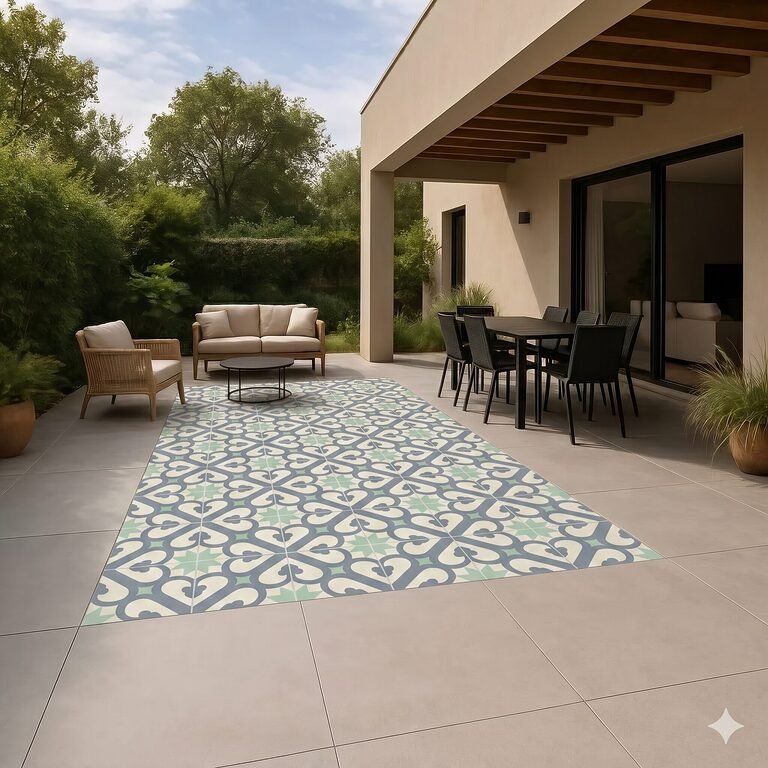
Can you picture a large, understated cement-look expanse across most of the terrace and a central rug of patterned tiles in the dining area? That mix of large format and handcrafted pattern works beautifully, especially in Mediterranean homes or projects with a vintage feel.
New applications in open-air spaces that are setting trends
Terraces and patios as outdoor living rooms
Large format tiles for terraces let you treat the outside as a direct extension of the living room. If you use a similar finish inside and out, the boundary between interior and exterior blurs, especially when you open up large glazed walls.
A trick many architects use: repeat the same format inside and out, but change the finish slightly (matt indoors, anti-slip outdoors). That way the space flows visually, while you keep safety and comfort in the rain.
Roof terraces and walkable roofs with a designer finish
Flat roofs are no longer just technical spaces. More and more of them are being turned into walkable roof terraces, sun decks or small chill-out areas. Large format is perfect for these surfaces because it reduces visual weight and makes the upper floor feel lighter.
It is common here to use raised paving systems on pedestals or adjustable supports, which help water drain away and let services run underneath (electricity, irrigation, lighting). With large tiles, the number of supports is optimised and the result is cleaner.
Paths and walkways in contemporary gardens
Forget the typical path of small, badly aligned slabs. Large pieces let you create walkways with personality, like sheets of stone floating over gravel or lawn. Laid a certain distance apart, they work like modern Japanese stepping stones, with a strong graphic effect.
If you alternate formats or rotate the odd piece slightly, you bring rhythm to the garden without overloading it. And if you also choose a tone that contrasts with the planting, the route becomes a clear line that guides the eye.
Porches, pergolas and outdoor dining areas
Porches and areas under a pergola benefit greatly from large tiles. These are spaces for sitting and lingering, with tables, sofas and planters, where a fragmented floor creates visual noise and competes with the furniture.
With large pieces, the floor becomes a neutral backdrop that lets textures shine: wood, natural fibres, plants, textiles. And with fewer joints, chair legs catch less and walking barefoot feels much more pleasant.
How to combine large format tiles with handcrafted floors
Tile rugs and smooth transitions
One of the most interesting combinations is to use large format as the base and keep handcrafted materials for specific areas: entrances, steps, pool surrounds or strips along the walls.
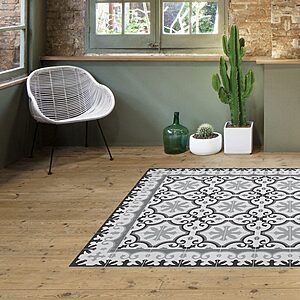
For example, you can create a tile rug by marking out a rectangle with patterned pieces and surrounding it with plain, large-size paving. The contrast between the graphic and the minimal adds character without cluttering the space.
Playing with scale: large outside, pattern inside
Another very effective option: use large format tiles outdoors and turn to more detailed floors indoors, such as geometric designs or cement tile motifs. That way, when you step through the door, the visual scale changes and the house feels cosier.
This approach works especially well in homes with a strong indoor-outdoor connection, typical of Mediterranean climates, where patio, terrace and living room are in constant dialogue.
Technical points to consider outdoors
Slip resistance and frost resistance
In open-air spaces it is not enough for the floor to look good. It must be slip-resistant, stand up well to the weather and, depending on the area, withstand frost. Finish, porosity and slip-resistance rating are key, especially around pools or wherever you walk barefoot.
Before settling on a large format tile, always check the technical data sheet: water absorption, abrasion resistance, flexural strength and thermal shock resistance. These small details are what make the difference over the years.
Substrate, slope and water drainage
Large pieces are less forgiving of poor substrate preparation. They need a very level base, with the right slope to drain water away, and an adhesive specifically designed for outdoor use and large formats.
Here the tiler’s work is decisive: back-buttering (double spreading), well-planned joints, tile levelling clips… It all helps to avoid hollow spots, breakages or standing water. This is no place for improvising.
Outdoor design: quick tips to get the most out of them
Choose the tone according to the light
In very sunny climates, very dark tones absorb too much heat and can be uncomfortable to walk on. Mid or light tones, inspired by limestone or soft cement, tend to work better: they reflect light and make the space look bigger.
If your patio gets little natural light, a large format in a slightly warmer tone may suit you better, to avoid an effect that feels too cold or like a “public square”. The key is to balance scale, colour and surroundings.
Think of the space as a whole, not just the floor
Large format tiles can also be used as vertical cladding on some surfaces: retaining walls, plinths, planters, built-in benches… Repeating the same finish on floor and wall creates a very elegant, enveloping effect.
Around them, you can play with more handcrafted textures, natural wood, plants and textiles. Large format provides the backdrop; everything else plays the lead roles that bring your outdoor space to life.