
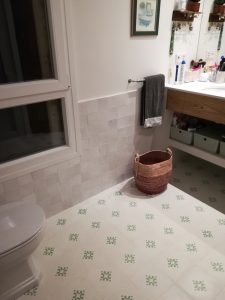
Moroccan tiles: zellige, bejmat and traditional formats
Moroccan tile is not one single product: bejmat, mjeddij, kora or carved zellige are different formats, each with its own sizes and pieces per m².
Moroccan tile is not one single product: bejmat, mjeddij, kora or carved zellige are different formats, each with its own sizes and pieces per m².

Zellige performs well on walls, fountains and façades in mild climates, but not on floors or where it freezes: this is what its test results say.

Which material goes on which surface, how to choose the colour, how to handle the junction and where not to mix cement tiles and zellige.
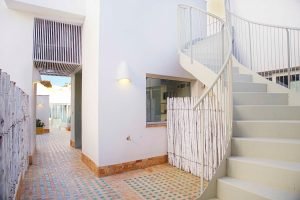
Where to use zellige at home and what to pair it with: ideas room by room, real formats with weight per m² and laboratory test data.

What zellige is, how it is made by hand, how it differs from zellige-effect ceramics and how it is laid in bathrooms, kitchens, floors and outdoors.
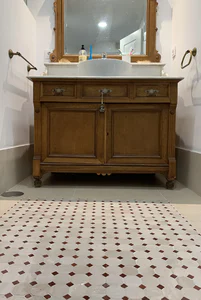
A guide to diagnosing damage in zellige, repairing it and maintaining it without harming the glaze or the joints.