Reclaimed zellige is having its moment, and not by chance. If you are drawn to the patina of time, the vibrancy of colour and the “imperfect” touch that only handmade tiles have, reusing them is the most sustainable route and the one with the most character. This article explains how to bring reclaimed zellige into your project, which trends are current and what to keep in mind so that your renovation combines authenticity, good design and the circular economy.
Reclaimed zellige: what it is and why it suits sustainable design
We are talking about the reuse of tiles made by hand from glazed clay, usually salvaged from selective demolition or left over from building sites. Every piece is unique, with tonal variation, uneven sheen and subtly irregular edges. The result is a living surface that changes with the light, without giving up the durability of glazed terracotta.
Now that upcycling is no longer a trend but a necessity, reclaimed zellige reduces waste, saves resources and extends the life of materials with high cultural value. It is sustainable interior design with a Moroccan soul, quite literally.
From Marrakech and Fez to contemporary reclamation
Traditional zellige is made in Morocco from selected clay, shaped and fired in high-temperature kilns. It is then glazed with mineral pigments that give those legendary greens, blues and whites. When we reclaim these pieces, their history comes with them: the patina of use, the fine crazing, the deep sheen of the glaze.
Reclamation today sorts, cleans and puts back into circulation the tiles that meet quality requirements, respecting their irregularity and their organic range of colour. It is craftsmanship reissued for contemporary projects.
Key advantages: aesthetics, sustainability and smart cost
First, aesthetics: the mix of tones, the undulating surface and the irregular edge create textures that industrial tiles cannot match. Second, sustainability: a smaller carbon footprint, less waste and more circular economy. Third, cost: depending on the stock available, reclaimed zellige can make a budget go further than new first-quality tiles, especially in small and medium wall-tiling projects.
2025 trends in reusing zellige tiles
Current trends embrace controlled mixing and colour used with intent. Think of warm bathrooms, kitchens with a watery sheen and corners with a handmade accent.
Tonal patchwork and mixed formats
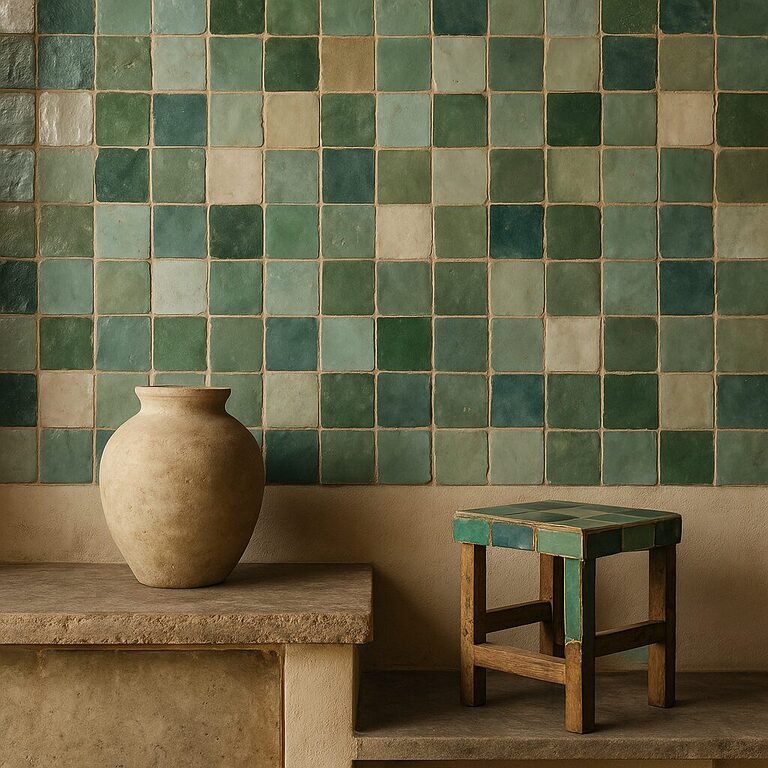
Tonal patchwork is on the rise: a single base colour (bottle green, celadon, midnight blue or ivory) in different saturations for a gradient effect. Combining 10×10 pieces with bejmat (rectangular tiles) adds rhythm and a graphic touch. The golden rule: do a dry layout first to balance the tones and avoid visual “patches”.
The single-colour look with matching grout is also gaining ground, creating a continuous skin that is ideal for showers and splashbacks. The shifting sheen of the glaze does the rest.
Kitchens and bathrooms with a handmade character
In the kitchen, reclaimed zellige works like a soft mirror for the light. With natural stone worktops, oak or brass details, the contrast is delightful. In the bathroom, use it from floor to ceiling in the shower area, or only on the wall behind the washbasin for a very strong accent.
We love it combined with microcement, slaked lime or even tadelakt on adjoining walls. The dialogue between mineral and glazed surfaces is pure sensory architecture.
Upcycled accessories and furniture
Beyond wall tiling, reuse pieces to clad a fireplace, to create a mural-style headboard or a small side table, or for a decorative dado running along the corridor. Offcuts work well for a panel behind the entrance hall furniture or as inlays in steps.
How to choose reclaimed zellige: tone, sizing and condition
The first step is to embrace variation. Zellige varies in tone by nature, and in reclaimed material that nuance is part of the charm. Ask for photos of the actual batch, not just a sample board, and confirm the approximate dimensions, thickness and type of edge.
Check the back: a sound clay body, with no structural cracks or flaking, is a guarantee of good bonding. It is normal to find small nicks or chipped corners; set those pieces aside for the edges or for cuts.
Sorting, cleaning and dry layout
A good supplier sorts the tiles by tone and size, and offers prior cleaning that does not harm the glaze. Before installing, open several boxes and lay out the panel on site, alternating tones for a natural distribution. Take photos under cool and warm light: the colour changes, and that way you will avoid surprises.
Real sustainability: traceability and the circular economy
Ask about the origin of the tiles and the reclamation process. Traceability is key to making sure that “recycled” is not just marketing. If the packaging is reused as well, even better. Sustainability happens along the whole chain, not just on the finished wall.
Installing and maintaining reused zellige
Installing reclaimed zellige takes care, but it is not complicated. Use a high-performance flexible tile adhesive (C2TES1 or higher) and a stable substrate. In wet areas, waterproof the substrate with a certified system.
Lay it with a minimal joint to respect its handmade character. The irregular edges call for a careful eye: align by visual reference, not just with wedges. Cut from the back with a thin disc for glazed ceramics.
Grouting and sealing: the finishing touch
Choose a mineral grout in a shade close to the tile if you want continuity, or a contrasting one if you want to bring out the pattern. On old pieces with fine crazing, consider sealing the glaze beforehand to avoid haze. Clean in small sections and dry immediately, without flooding the surface.
For maintenance, use lukewarm water and neutral soap. Avoid abrasives and strong acids. If you want to enhance the patina, a light coat of wax in dry areas adds depth without a plastic look.
Where to find reliable reclaimed zellige
At Demosaica we work with Moroccan tiles every day and curate batches of reclaimed zellige ready to install. If you are looking for rare shades, coherent mixes and advice on installation, you have come to the right place.
Explore our selection of zellige, ask for images of the actual batch and tell us about your idea. We will help you work out quantities, choose the grout and refine the details so that your space conveys craftsmanship, colour and a sustainability you can see and touch.