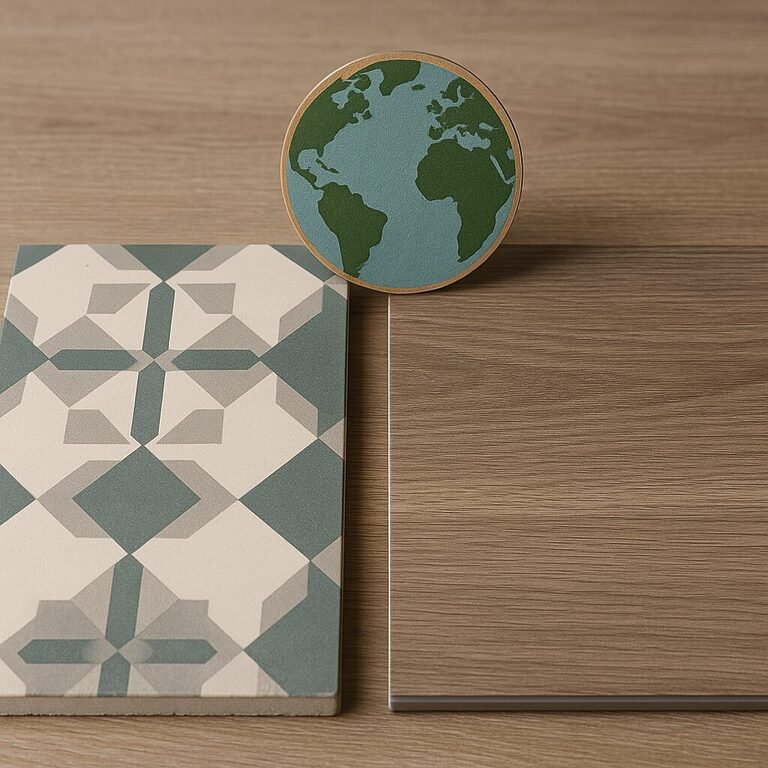
Looking for a floor that is both beautiful and kind to the planet? This quick, honest comparison looks at how cement tiles and vinyl flooring perform when it comes to sustainability. No detours: just the key data and a focus on what really matters, namely raw materials, energy, indoor health, durability and end of life.
What “sustainable flooring” means today
When we talk about an “eco” floor, recycling is only part of the story. The full picture covers its life cycle: where the materials come from, how much embodied energy it takes to make, whether it gives off VOCs indoors, how long it lasts, how it is repaired and what happens when it is taken up.
Raw materials and origin
Cement tiles are made from simple mineral ingredients: cement, sand, water and pigments. There are no resins or petroleum derivatives. Vinyl flooring (LVT, SPC, WPC), by contrast, is based on PVC and plasticisers, sometimes mixed with mineral fillers. It is essentially a plastic product, even if some ranges include recycled content.
Manufacturing process and energy
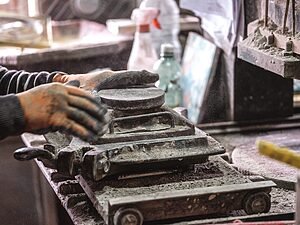
There is a key point here: cement tiles are not “fired”. They are pressed and cured. Doing without a kiln reduces the carbon footprint of the process, although cement does carry emissions from its own manufacture. Vinyl requires industrial extrusion and calendering processes that are energy-intensive and depend on fossil-based polymers.
Why cement tiles appeal to the environmentally minded
If the Spanish term “mosaico hidráulico” (literally “hydraulic mosaic”, another name for cement tile) sounds familiar, you are on the right track. Handmade pieces such as these cement tiles are dense, repairable and made to last for decades. That changes everything: when a floor lasts beyond 40–60 years with proper maintenance, its annualised impact plummets.
What they do not contain matters too: there are no ongoing emissions of volatile organic compounds and, with the right sealers, they can be cleaned with neutral products. On top of that, the option of polishing and renewing the surface layer extends their service life even further. And if design matters to you, the look is timeless: patterns, mineral colours and that patina that tells a story.
Vinyl flooring: comfort, water resistance… and environmental doubts
Vinyl has its strengths: quick installation, comfort underfoot and high moisture resistance. In retail or fast-track renovations it can be a practical choice. But environmentally there are drawbacks. It is a plastic material with additives, an average service life of 10–20 years and limited real-world recyclability. Much of it is “downcycled” or ends up in landfill.
VOC emissions? The best LVT products carry labels such as FloorScore or A+, which is a good thing. Even so, adhesives and finishing layers can give off emissions at first. Some products are sold as “low VOC”, but it pays to read the technical data sheets and ask for certificates. In the long run, scratches and surface wear mean replacement, not repair.
Comparing the impact: from factory to site and beyond
Lifespan and replacement frequency
The factor that weighs most in the “green equation” is durability. A well-laid cement tile floor can outlast generations. If a vinyl floor is replaced two or three times over the same period, the cumulative environmental burden grows, however light each layer may be.
End of life and circularity
Cement tiles can be salvaged, cleaned and reused. In fact, there is a lively market for antique tiles precisely because the pieces hold up. That kind of genuine circularity is hard to achieve with vinyl: separating layers, additives and adhesives makes recycling difficult. And when it comes to incineration, PVC requires strict controls to avoid problematic emissions.
Installation and maintenance
With cement tiles, use low-emission adhesives and sealers and you will have a healthy interior. Maintenance comes down to neutral soap and renewing the water-repellent impregnator when water no longer forms droplets on the surface; polishing is a last resort, not maintenance. With vinyl, click installation reduces the use of adhesives, but glued-down products can add VOCs in the short term. Cleaning usually calls for specific products depending on the finish.
Indoor health: air quality and VOCs
In homes, hotels and restaurants, indoor air quality is crucial. Cement tile, being mineral and resin-free, starts with an advantage: it is inert once cured. Vinyl has made notable progress, it is true, but every product is different. Ask for EPDs, emissions data sheets and certifications such as BREEAM, LEED or WELL to compare rigorously.
Local production, craftsmanship and timeless design
Producing locally cuts transport and packaging. The craft nature of cement tiles allows small runs, customisation and less waste. And the design does not “expire”: you will not need to replace the floor because fashions change. With vinyl, the printed designs are updated quickly; fine for following trends, less so for a long-term choice.
Use cases: renovation, new build and commercial spaces
In renovations with a screed, cement tile comes into its own: its mass adds thermal inertia, its texture is warm and its look sits well with traditional joinery and mortars. In new builds, it earns points in sustainable building strategies, especially where there is renewable energy and materials are selected with an EPD.
In areas with constant water or very frequent changes of tenant, vinyl can be practical thanks to its speed and surface resistance. But if your goal is to lower your carbon footprint over 30 years, opting for a durable, repairable mineral floor covering makes sense.
How to choose wisely (without overcomplicating it)
If your priorities are natural materials, low emissions and a long life, cement tiles are your ally. Think of them as an “heirloom floor”: it is looked after, enjoyed and handed down.
If the project calls for express installation, a tight budget or a short-term look you will change in the medium term, vinyl does the job. Just make sure you choose low-VOC products with verified recycled content and take-back schemes at the end of their life.
Small steps that make a difference
Whatever you choose, reduce the impact with simple decisions: low-emission adhesives and sealers, cleaning with neutral products, protecting the surface during building work and a design that does not follow passing fads. When it comes to sustainability, what you replace less often always wins.