

Hexagonal cement tiles: formats, patterns and where they fit
H21, H22 and H23 formats with real sizes and weights, layouts, perimeter cuts and where a hexagonal cement tile really fits.
H21, H22 and H23 formats with real sizes and weights, layouts, perimeter cuts and where a hexagonal cement tile really fits.
Seven checks to find out whether a floor is a real cement tile or a porcelain that copies it, with figures from our own test reports.
The price of a cement tile floor depends on the format, the colours of the pattern, custom design and laying: this is how the quote is built up.

Have you ever wondered what it would be like to have a floor that is a work of art in itself? The hydraulic tile drawings allow you to explore the beauty and versatility of these unique designs. In this article, you will discover the history and evolution of hydraulic tile designs, as well as the

The history of the cement tile begins around 1850 in the south of France. It is a pigmented cement tile made cold: a face layer of white cement, marble powder and mineral pigments over a base of cement and sand, compacted in a press and hardened by hydration, with no kiln. It is a concrete
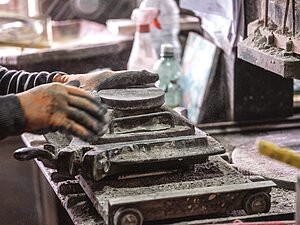
Cement tiles are made cold, piece by piece: the craftsman pours coloured mixes of white cement, marble powder and pigments into the cells of a metal template called a divider, adds a drying layer and then a layer of mortar, presses the whole in a hydraulic press and leaves the tile to cure with water