A floor can tell the story of a building without saying a single word. Cement tile floors are that silent soundtrack: handmade pieces that have outlived fashions and renovations and still speak to us of craft, technique and everyday beauty. If you are interested in heritage and architecture, this look at the cultural value of cement tiles in historic buildings is for you.
What cement tile floors are and why they count as heritage
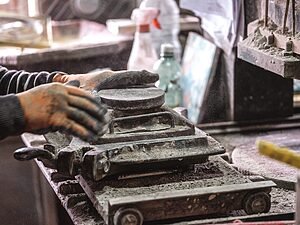
When we talk about encaustic cement tiles, we mean a handmade floor covering made from pigmented cement compressed in a press. No kilns are involved: the colour is fixed by pressure and by the setting of the cement. Hence their Spanish names, losetas hidráulicas or solería hidráulica (“hydraulic” tiles or flooring). Born in the mid-19th century and popularised by Modernisme and Art Nouveau, these floors turned bourgeois houses, mansions and historic cafés into living stages for geometric patterns, flowers and borders.
Their heritage value is not just aesthetic. Each tile carries the imprint of a technique: brass moulds, mineral pigments, fine aggregates, a generous wear layer and a curing process that gives them their unique patina. They are, quite literally, the material memory of the Mediterranean city, as much as coffered ceilings or wrought-iron grilles. They also share a spirit with other crafts such as Moroccan zellige: precision, craftsmanship and a timeless sensibility.
Craftsmanship, technique and materials that create value
Behind every floor there is a method. The “face layer”—about 3–5 mm of white cement with pigments—is poured into a mould that carries the design. Backing layers are then added and the whole tile is pressed while still wet. The result is a high-density floor with deep colours and surprising strength. This process, which specialist workshops can still reproduce today, makes it possible to restore or complete cement tile rugs without losing authenticity.
The language of colour in historic buildings
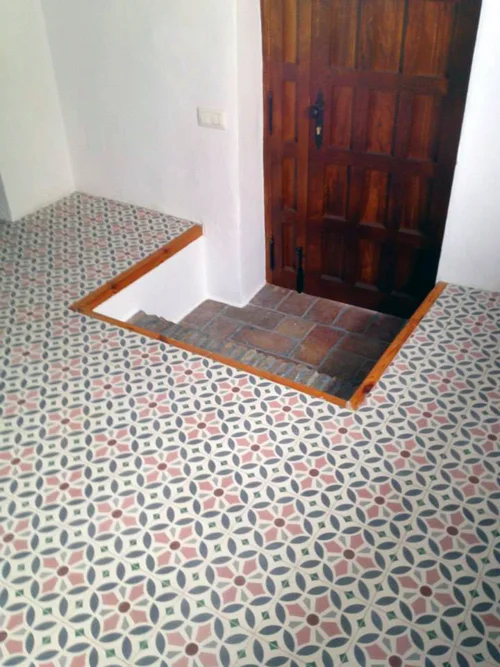
In the houses of 1900, tiles were not laid at random. Cement tile floors formed tile rugs in living rooms, sober chequerboards in corridors and borders that finished off each room like the frame of a painting. Colour said: this is where guests are received, this is where work is done, this is where people rest. That spatial reading—together with the geometric or floral pattern—is a crucial part of their cultural value.
Many protected buildings still keep original tiles in kitchens, entrance halls and stairways. Restoring them properly is not just a question of looks; it means respecting the building’s story, its ergonomics and its acoustics. Cement tile flooring softens footsteps and adds thermal comfort, no small advantages in the daily life of a historic building.
Modernisme, Art Nouveau and Mediterranean tiled floors
Barcelona, Valencia, Seville and Palma all preserve outstanding examples. The Modernisme aesthetic turned the cement tile into a canvas on which geometric shapes, plant-like curves and terracotta palettes converse with joinery, stained glass and wrought iron. That integration of the decorative arts is precisely what makes these floors irreplaceable.
Conserving and restoring historic cement tile floors
Restoring a cement tile floor is not about erasing time but about stabilising it. The first step is diagnosis: identifying loose tiles, cracks, loss of the face layer, and oil or acid stains. Then comes the choice of reversible interventions that are compatible with the original materials. “Haste” is a poor adviser here: a gentle clean is better than aggressive polishing.
Cleaning: water and pH-neutral soap, no abrasives. For stains, test first on inconspicuous areas. Consolidation: compatible adhesives and bedding mortars similar to the traditional ones. Reintegration: salvaged tiles or made-to-measure reproductions with the same face-layer thickness and calibrated colour matching. Finally, protection: breathable sealers and, if you wish, natural wax on top; never products that form a glossy film and block the pores.
Mistakes that destroy heritage value
• Aggressive polishing “to make it shine”: it thins the colour layer and erases the historic patina.
• Acids, bleach or harsh strippers: they attack the cement, open the pores and bleach the pigments.
• Replacing it with imitation porcelain tile: it breaks the historic reading and devalues the whole.
• Rigid, incompatible grouting: it can crack tiles as they expand and contract.
Faithful reproduction and responsible replacement
When tiles are missing, handmade reproduction is your best ally. At Demosaica we make cement tiles with brass moulds, mineral pigments and modern presses that replicate the historic process. The key is to match the grain size, the thickness of the wear layer and the colour saturation, so that the new tile can sit alongside the old ones without “shouting” louder than the whole.
We can trace patterns from a sample, remake borders and finishing pieces, or design discreet transitions when the lost area is large. This responsible replacement makes it possible to recover complete tile rugs, make the space easier to read and extend the life of the floor without falsifying its history.
More cultural value, more property value
Conserving a cement tile floor strengthens a building’s identity. Visitors notice it, buyers want it and cultural routes celebrate it. A well-restored original floor is a branding asset for boutique hotels, high-end homes and public spaces with a heritage vocation. In other words, it adds character and increases value in the long term.
Everyday maintenance that really works
Look after a cement tile floor and it will look after you. Sweep often and use a well-wrung mop; little product, and always neutral. To bring out the colours, an occasional coat of natural wax, applied thinly and without build-up. Put felt pads under heavy furniture and avoid dragging it. At outside entrances, coir mats cut down the abrasive dust and sand brought indoors. It is that simple.
If a stubborn stain appears, work from the gentlest method upwards and ask before experimenting. The beauty of pigmented cement lies in its pores: respect them and it will reward you with depth of colour and that much-loved patina.
How to blend in new tiles without losing the floor’s soul
In refurbishment, it pays to combine original areas with new ones that respect the rhythm, colour range and scale of the pattern. Well-chosen contemporary cement tiles let you extend a tile rug, complete a corridor or create a transition in kitchens and bathrooms without pretence. Keep the module, adjust the saturation and let time subtly even things out.
Think of the floor as a mineral tapestry. Each room can have its own pattern, but they should all speak the same colour language. That is how the building’s coherence is preserved and justice is done to its original spirit.
Why Demosaica?
Because we combine craft and technology. We work on design, colour and technique with a heritage eye: we measure, take samples and run tests until the whole floor breathes as one. If you need advice on documenting, conserving or completing your cement tile floor, we are here to help.