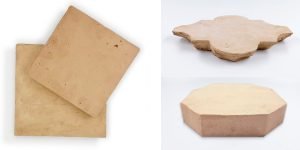
Terracotta can be left untreated, but in a home it is almost never worth it. It is unglazed fired clay with an open pore: ours absorbs 16.9 % water in the laboratory test, and without protection oil, wine or cement grout get into the pore and will not come out again, either with hot water or with a mild cleaner. That is why outdoors terracotta is always given a water repellent, in a house it is treated, and it is only left bare when you deliberately want it to age along with its stains.
The real decision, then, is not whether to treat it or not, but what with and at what stage of the work. Here we compare the two options using the data for our terracotta, go through the protective products available — water repellent, wax, oil and varnish — and look at which one suits each room.
What happens to terracotta if it is not treated?
It absorbs and it stains. This is not an impression: these are the results of test report no. 7539 from the Elabora laboratory on our 15 × 5 cm terracotta, published in full on the laboratory tests page.
| Test | Result for our terracotta | Standard | What it means if the tile is untreated |
|---|---|---|---|
| Water absorption | 16.9 % on average (between 15.9 % and 17.9 %) | UNE-EN ISO 10545-3 | Water, oil and grout get into the pore |
| Stain resistance | Class 2 with all three staining agents | UNE-EN ISO 10545-14 | The stain does not come out with water or soap: it takes a solvent, and some procedures did not remove it |
| Chemical resistance | Classes UA, ULA and UHA with no visible effect | UNE-EN ISO 10545-13 | The tile stands up to acids and alkalis; what they damage is the treatment |
To put the figure in context: porcelain stoneware stays below 0.5 % absorption, so terracotta absorbs around thirty times more. That is not a defect — its feel, its colour and its breathability come from that pore — but it means the pore has to be closed before the floor comes into use. Terracotta and fired clay are, incidentally, the same material: clay moulded and fired without a glaze.
Treated and untreated terracotta: how they differ
The comparison that matters is between bare terracotta and terracotta with a penetrating water and stain repellent, which is the base treatment. Wax or oil are added afterwards, if you want them, and mainly change the look.
| What we compare | Untreated | Treated with water and stain repellent |
|---|---|---|
| Oil and wine stains | They get into the pore; they come out with a solvent or not at all | The surface stays washable; wiped up straight away, they clean off |
| Grout during grouting | The cement haze stays inside; removing it takes acid, which takes the colour with it | The first coat, applied before grouting, stops the grout getting in |
| Look | Matt, with the patina left by use and by stains | Natural or slightly enriched |
| Daily cleaning | Any spill is a potential stain | A well-wrung mop and pH-neutral soap |
| Maintenance | None, if you accept the way it ages | Renew the water repellent when water stops beading |
| Outdoors | Not recommended: it absorbs water, stains and suffers more from frost | Essential, with water repellent and no wax |
| Kitchen and bathroom | No | Yes: in the kitchen, water and oil repellent; in the bathroom, outside the shower tray |
When does it make sense to leave terracotta untreated?
In very few cases. Untreated terracotta makes sense in specific uses where natural ageing is what you are after and the patina is accepted, stains included: whoever chooses it knows that the first oil stain will stay for good and accepts it as part of the floor’s character.
It does not make sense in a home in everyday use, where a material with 16.9 % absorption living underneath a kitchen, a few plant pots and everybody’s shoes ends up stained, nor in a bathroom or outdoors. Outside, the water that gets into the pore is what later freezes and breaks the tile, and the stain test leaves no margin: outdoors, terracotta is always given a water repellent. We explain it with data in outdoor terracotta tiles.
If what draws you to untreated terracotta is its matt, natural look, you do not have to give it up: a penetrating water repellent works inside the pore, without forming a film, and leaves the tile looking natural or barely enriched.
Which treatment should you choose: water repellent, wax, oil or varnish?
Two layers with different jobs are combined: a product that closes the pore from within, which is the protection, and, if you want it, a finish on top, which is an aesthetic decision. Wax adds tone and a warm satin sheen, but it is no substitute for the water repellent.
| Treatment | What it does | Look | When it is renewed | Points to bear in mind |
|---|---|---|---|---|
| Penetrating water and oil repellent | Closes the pore from within, leaves no film | Natural or slightly enriched | When water stops beading | The essential base; the oil repellent also protects against grease |
| Natural or liquid wax | Sacrificial layer on the surface | Warm satin, deeper tone | Topped up while mopping, every few months depending on traffic | Indoors only; it builds up dirt over the years, and a full renewal means stripping it |
| Traditional oil or soap | Saturates the pore and feeds the tile | Deep matt; darkens the terracotta | Often in the first months | Yellows over time and offers little protection against grease |
| Varnish or film-forming sealer | Forms a plastic film on top | Artificial, uniform gloss | When it scratches or peels off | Not recommended: it lifts in patches and repairing it means stripping the whole floor |
That is why at Demosaica we recommend a water- and stain-repellent treatment during installation, and the finish is left to each client’s taste. We cover how water repellents and wax are applied, in general terms, in the tile treatment guide.
Which treatment suits each room?
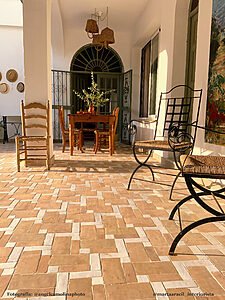
- Living room, bedroom, hallway and entrance. A penetrating water and stain repellent and, if you are after the traditional look, wax on top. To keep the tone, it is enough to dissolve a little natural wax in the mopping water, which is what we recommend for our terracotta.
- Kitchen. The treatment has to be water repellent and oil repellent: in a kitchen what stains is not water but grease, which falls hot, penetrates fast and only comes out with a solvent.
- Bathroom. A penetrating water and stain repellent, never varnish. Be cautious with wax: a wet waxed film is more slippery and holds on to soap. Inside the shower tray, unglazed terracotta is not a good idea: it stays saturated and the treatment wears out long before its time.
- Outdoors. A penetrating water repellent and no wax, which breaks down in the sun, holds on to dirt and can make the surface slippery when wet. If the site gets frost several times a year, also ask for the frost resistance test on the tile.
- Shops and hospitality. The same treatment as in a home; what changes is how often it has to be renewed.
How terracotta fits into each room of the house, with the order of works and the cleaning routine, is covered in the guide to indoor terracotta floors.
At what stage of the work is terracotta treated?
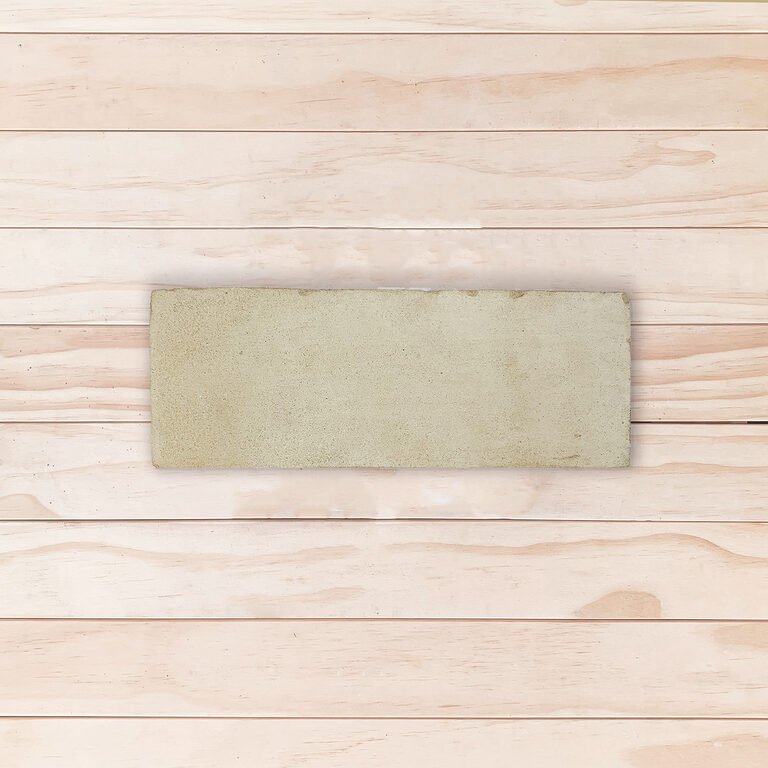
Terracotta is treated on site, at two points: a first coat on the tiles once they are laid, before grouting, and the final treatment when the whole floor is dry. So rather than buying treated or untreated terracotta, what you are really deciding is how it is treated during installation. This is the order that avoids almost every disaster:
- Lay with flexible tile adhesive, buttering both faces, on a dry, flat and clean substrate, with a joint of 3 to 5 mm depending on the format.
- Protect before grouting. With the surface dry and clean, one coat of water-repellent impregnator on the face of the tile stops the grout getting into the pore. This is the step most people skip.
- Grout with white grouting cement and clean it off while fresh, with a sponge and clean water. Never pigmented grout: the pigment penetrates the terracotta and the stain is irreversible. There is more on grouting in the guide on how to choose and apply grout.
- Let the whole floor dry: weeks, not days. The reliable check is to tape down a plastic sheet of about 50 × 50 cm and leave it for 24 hours; if there is condensation when you lift it, or the tile has darkened, the substrate is still damp.
- Final treatment: water and stain repellent over the dry floor, joints included, and wax on top if you are after the traditional look.
The expensive mistake is the reverse order: grouting over the bare tile and sealing weeks later, when the cement haze is already inside. Sealing over trapped moisture does not work either: the water is shut in underneath and the treatment lasts weeks.
How do you maintain treated terracotta?
With little water, pH-neutral soap and quick drying. Every day, sweep or vacuum: the grit brought in from the street acts as an abrasive and is what wears the treatment most. Every week, a well-wrung mop with warm water and pH-neutral soap, without flooding the floor.
What you must never use is bleach, ammonia, spirits of salt, vinegar or acidic or abrasive cleaners. The nuance lies in the chemical resistance test: the fired tile stands up to those products, but the water repellent and the wax on top of it do not. Bleach does not ruin the terracotta; it ruins its protection.
You do not need a calendar to know when to renew the treatment: let a few drops of water fall on the busiest areas. If they bead and are slow to soak in, the water repellent is still working; if the tile darkens within seconds, it is time to renew it. In a home that moment arrives much later than in a commercial space.
And if a terracotta floor gets scratched or stained, it can be put right: it is stripped, sanded and treated again.
Frequently asked questions about treated and untreated terracotta
Can terracotta be left untreated?
It can, but it only pays off when natural ageing is deliberately what you want and the stains are accepted. Untreated, our terracotta absorbs 16.9 % water and an oil stain only comes out with a solvent. In a home, in the kitchen, in the bathroom and outdoors it should always be treated.
Which is better for terracotta, water repellent or wax?
They are not alternatives. The penetrating water repellent is the protection: it closes the pore from within. Wax is an optional finish that goes on top, indoors, and gives tone and a warm satin sheen. Outdoors it is best avoided, because it breaks down in the sun and can make the surface slippery when wet.
Is the treatment applied before or after grouting?
Both. A first coat of water repellent on the laid tile, before grouting, so that the grout does not get into the pore, and the final treatment when the whole floor is dry, weeks later.
How often does terracotta treatment need renewing?
There is no fixed interval: it depends on traffic, sun, rain and cleaning. To check, pour a little water on the tile: if it beads, the treatment is still active; if the tile darkens within a few seconds, it needs renewing.
Can terracotta be mopped with bleach or vinegar?
No. Terracotta resists acids and alkalis in the laboratory test — classes UA, ULA and UHA — but the water repellent and the wax are destroyed by those products, and with them goes the protection against stains. Warm water, pH-neutral soap and a well-wrung mop.
Does the treatment change the colour of terracotta?
It depends on the product. A penetrating water repellent leaves a natural or slightly enriched look; wax gives a warm satin sheen and a deeper tone, and oil darkens the terracotta. If you want the look closest to untreated terracotta, the water repellent alone is enough. Try it first on a spare tile.
You can see formats and collections on the terracotta tiles page and the material in place in the terracotta photo gallery. If you are torn between terracotta and a floor that needs no treatment, we compare them in terracotta or terracotta-effect porcelain. And for your project, write to us and we will help you with the format, the quantity and the treatment.